

Sore, tender, or cracked nipples are common concerns during breastfeeding, especially while feeding is being established. When every feed hurts, it is understandable to look for something that can protect sensitive skin and make the time between feeds more comfortable.
One option is the silver nursing cup: a small, curved cup worn over the nipple inside the bra between feeds.
But do silver nursing cups actually work?
The answer is more nuanced than many product claims suggest. Some mothers find silver cups comfortable and useful for protecting sensitive nipples from friction, but current evidence does not show that they are a guaranteed treatment for nipple pain or damage. More importantly, persistent breastfeeding pain usually needs the underlying cause addressed.
Why do nipples become sore during breastfeeding?
Some nipple tenderness can occur when breastfeeding is first being established, but ongoing pain, cracking, or bleeding should not simply be accepted as normal.
Current NHS guidance says that sore nipples are commonly related to the baby not being positioned or attached effectively at the breast. A shallow or ineffective latch can repeatedly compress or rub the nipple and contribute to pain and damage.
Other issues may also contribute, including pumping-related trauma, skin irritation, infection, or other breastfeeding difficulties.
If your nipples hurt at every feed, begin to crack or bleed, or the problem is not improving, getting breastfeeding support early is more useful than relying on a product alone.
What are silver nursing cups?
Silver nursing cups are smooth, curved cups designed to sit over the nipple and surrounding area inside the bra between feeds.
Unlike an absorbent breast pad, a cup creates a physical space between sensitive skin and clothing. This may help reduce direct rubbing against a bra or fabric when the nipple is tender.
The cups are removed before breastfeeding.
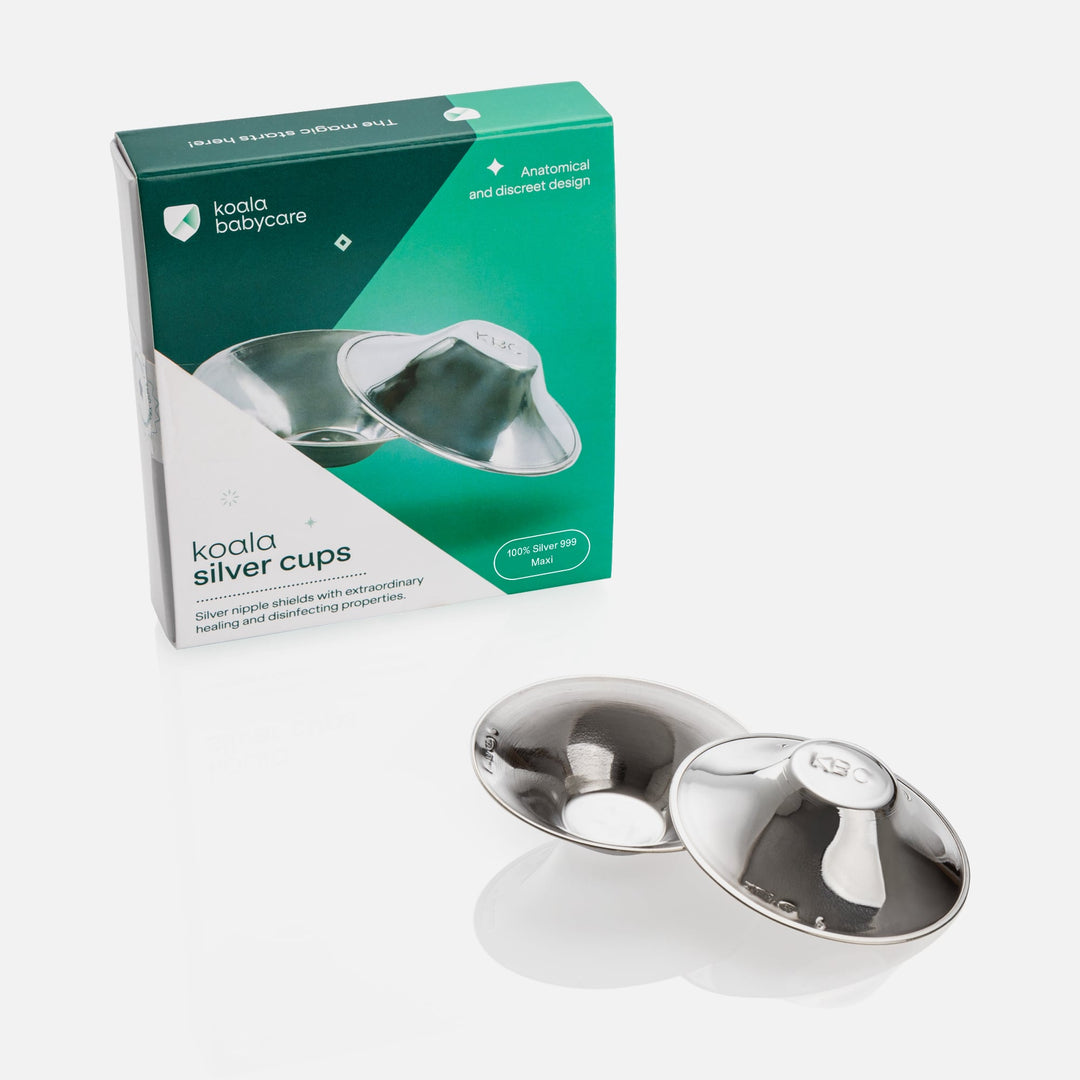
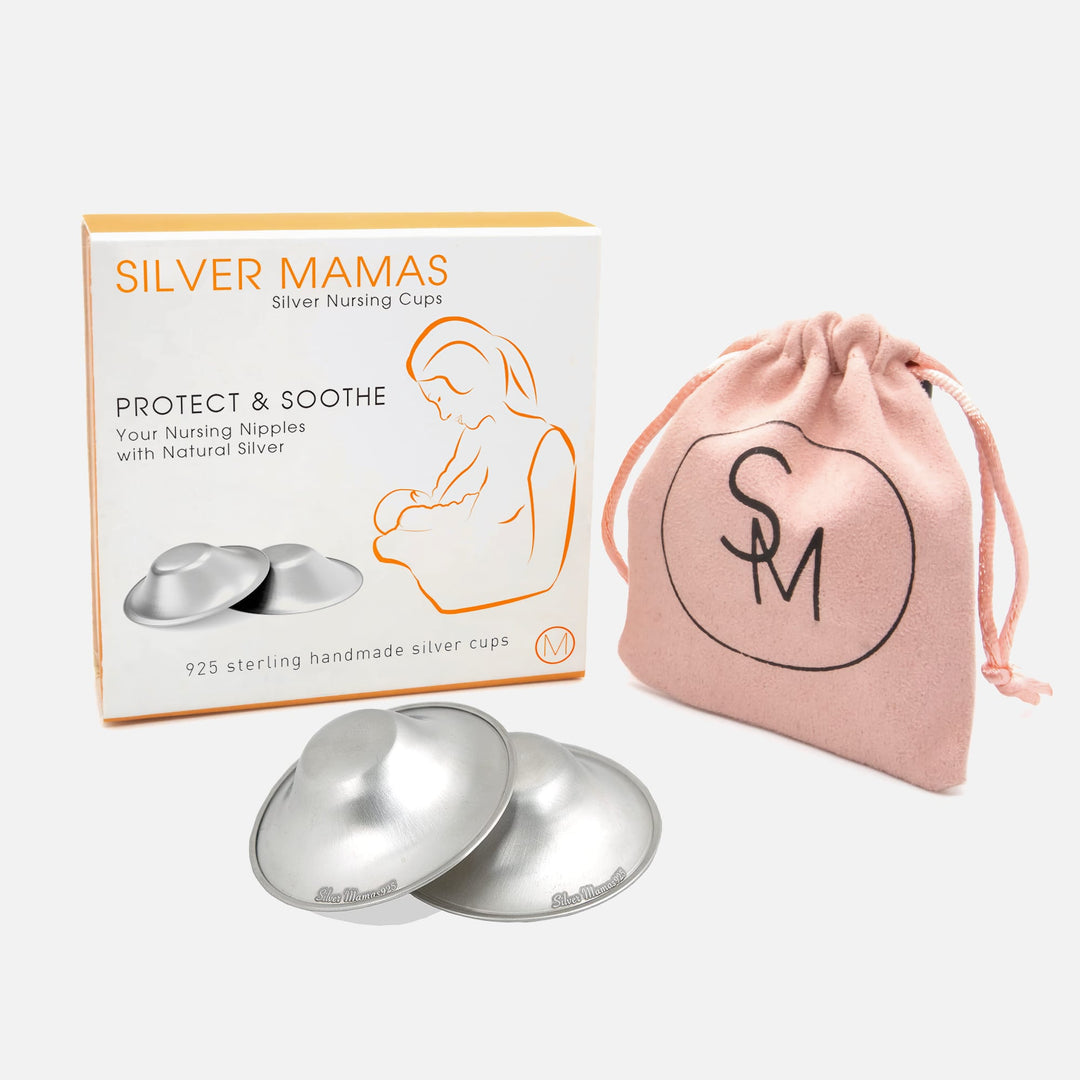
Different products use different silver constructions. For example, Silver Mamas Silver Nursing Cups use 925 sterling silver, while Koala Babycare Koala Silver Cups are available in 999 silver and a trilaminate silver construction.
Those material differences describe how the products are made. A higher silver purity should not automatically be interpreted as evidence of better results for nipple pain or healing.
What does the research say about silver nursing cups?
The evidence is still limited, and current guidance is not completely uniform.
A 2026 systematic review of interventions for breastfeeding-related nipple pain and trauma examined 22 studies. Overall, the researchers found that no single intervention was consistently superior and emphasized identifying the underlying cause, correcting breastfeeding technique, protecting skin integrity, and providing individualized professional support.
One study included in the review looked specifically at silver nipple cups. Although many mothers who used them felt they were effective, the study did not find a clear reduction in nipple cracks or other lesions compared with women who did not use them.
Guidelines also differ. The NHS currently lists silver nipple cups as one self-care option that may be tried between feeds when nipples have started to crack. In contrast, a 2026 clinical fact sheet from Ireland's Health Service Executive takes a more cautious position because the quality of evidence remains poor and warns that prolonged use may keep the nipple excessively moist.
The most balanced conclusion is therefore that silver cups may provide comfort and physical protection for some users, but they should be considered an adjunct rather than a proven cure.
What can silver nursing cups realistically do?
The clearest practical role is physical protection.
When nipples are very sensitive, even contact with a bra or breast pad can be uncomfortable. A properly fitting cup creates space around the nipple and can reduce direct rubbing against clothing.
What a silver cup cannot do is correct an underlying problem such as:
- A shallow or painful latch
- Poor positioning
- Pumping-related nipple trauma
- An infection
- A skin condition
- Another cause of persistent nipple pain
If the same source of trauma continues at every feed, protecting the nipple between feeds may improve comfort without solving the cause.
Silver nursing cups are not nipple shields
These products are sometimes confused, but they have very different roles and are used at different times.
Silver nursing cups are worn inside the bra between feeds. They create a protective space around the nipple and are removed before breastfeeding.
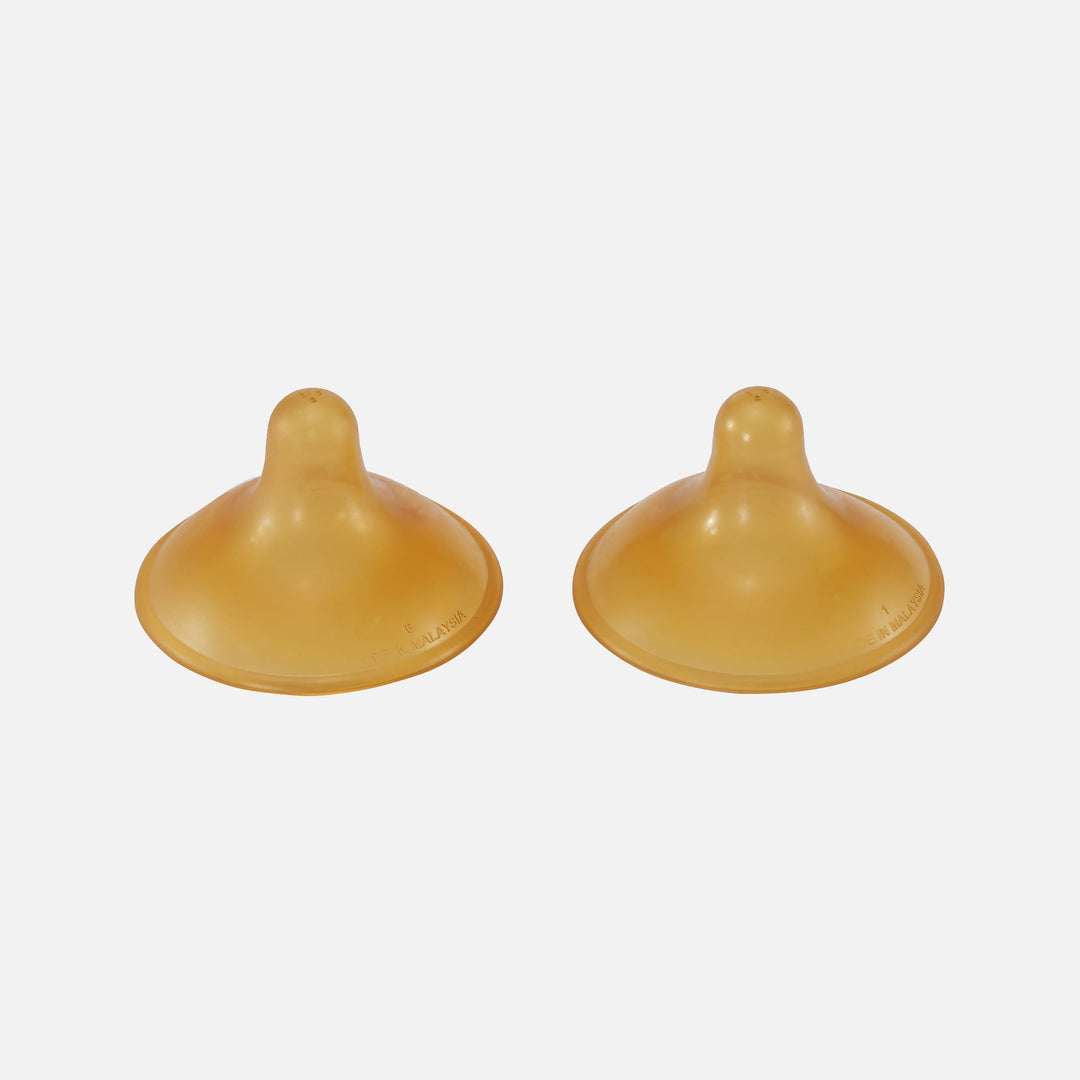
Nipple shields are thin covers placed over the nipple during breastfeeding, so the baby feeds through the shield.
Nipple shields may be useful in certain breastfeeding situations, but they should not automatically be used simply because breastfeeding hurts. Attachment and milk transfer still need to be considered, and a shield does not by itself correct the cause of persistent nipple pain.
If a breastfeeding professional has recommended a nipple shield for your situation, HEVEA Nipple Shields are one available option.
For ongoing soreness or damaged nipples, getting help with positioning and attachment remains more important than simply adding a shield.
Should you choose 925 or 999 silver?
You may see nursing cups described as 925 sterling silver, 999 silver, or a layered silver construction.
These descriptions tell you about the composition of the cup. They do not establish that one silver purity produces better clinical results than another.
More practical considerations include:
- Whether the cup fits comfortably around the nipple and areola
- Whether its edge creates unwanted pressure
- How comfortably it sits inside your bra
- How easy it is to clean and dry
- The manufacturer's care and usage instructions
Fit matters. A cup should protect the nipple without creating painful pressure on the surrounding breast tissue.
How should silver nursing cups be used?
Follow the instructions supplied with your specific product and any guidance from your breastfeeding or healthcare professional.
The general principle is:
- Use the cups between feeds rather than while the baby is breastfeeding.
- Place a clean cup gently over each nipple inside the bra.
- Make sure the cup is comfortable and is not pressing painfully into the breast.
- Remove the cups before breastfeeding or pumping.
- Keep the cups clean and dry according to the manufacturer's instructions.
Do not assume that wearing a cup continuously for longer periods will produce better results. Excess moisture or pressure around already damaged skin may be counterproductive.
If soreness persists despite using a cup, the priority should be reassessing the cause rather than simply wearing it for longer.
What should you do first if breastfeeding hurts?
The most important step is to look at the feed itself rather than immediately choosing a product.
If the nipple hurts throughout feeds, comes out flattened, wedged or white, or begins cracking or bleeding, ask a midwife, lactation consultant, breastfeeding supporter, or other qualified healthcare professional to observe a feed.
Correcting positioning and attachment can address repeated mechanical trauma rather than simply managing the nipple afterwards.
Different products may then play different supporting roles. Silver nursing cups can protect sensitive nipples between feeds, while nipple shields may sometimes be used during feeding for a specific breastfeeding need. Neither should replace assessment of persistent pain.
When should you seek help?
Seek breastfeeding or medical support if:
- Your nipples hurt throughout most or every feed
- The nipple is cracked or bleeding
- Pain is becoming worse rather than improving
- You have persistent burning pain between feeds
- There is unusual redness, swelling, discharge, or another possible sign of infection
- You are concerned that your baby is not attaching or feeding effectively
- Pain is making you consider stopping breastfeeding
Early support can help identify a correctable feeding issue before nipple damage becomes more severe.
The simple answer
Silver nursing cups may be a useful comfort and protection option for sore or cracked nipples between feeds, but they should not be treated as a proven cure.
Current evidence does not show clear superiority over other approaches, and professional guidance is not completely uniform. Their most straightforward role is creating a physical barrier between a sensitive nipple and clothing.
The priority is still to identify why breastfeeding hurts. If positioning, attachment, infection, pumping technique, or another problem is responsible, that underlying issue needs attention.
Used appropriately, silver nursing cups can form one part of a breastfeeding comfort routine—but they are best viewed as a supporting accessory rather than a replacement for good breastfeeding support.
This article provides general educational information and is not a substitute for individual breastfeeding or medical advice from a qualified healthcare professional.


Leave a comment